3 SLIS Field Trips in 3 Days
Posted April 14, 2026 by Brooke Thomson
Hi readers! You read that right—the week of April 6 to April 10, this Archives student was pretty busy. I went on three different SLIS field trips around Boston: the Massachusetts Historical Society, the Boston Symphony Orchestra Archives, and the Harvard Fine Arts Library. Stick around to hear about each experience!
1. Massachusetts Historical Society
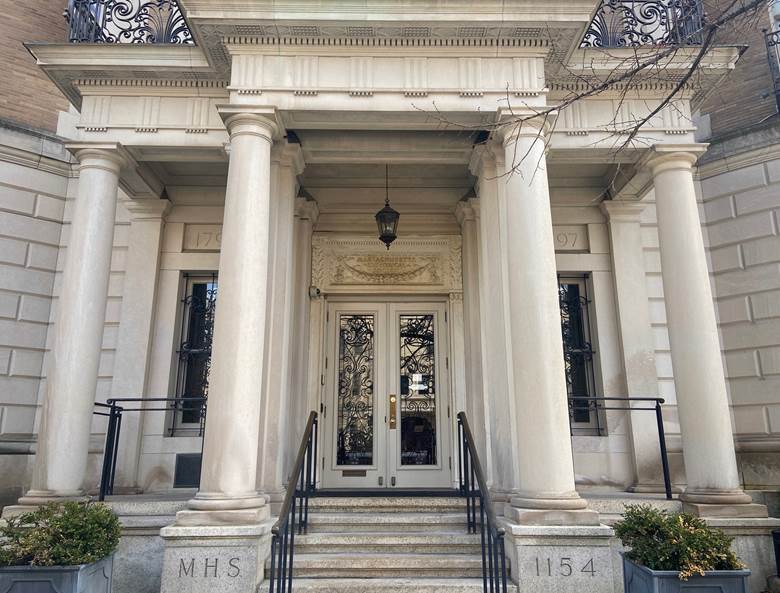
Last Tuesday, Professor Jiarui Sun took us LIS438 students to the Massachusetts Historical Society for our weekly class session. My first impression was of the beautiful building itself—originally designed to look like an upper-class private residence, so it would blend in with the neighborhood of affluent Bostonians. Now, the area is frequented by flocks of instrument-toting students at the Berklee College of Music, which is literally right next door. And it’s only a 20-minute walk from Simmons University along the Emerald Necklace! Spring technically ‘started’ on March 20th, but it’s only just beginning to look like it. That Tuesday, there was still enough brisk wind to warrant my usual puffer coat, but at least the sun was shining in a clear blue sky and smatterings of flowers could be seen on the trees. I’m learning all about Early Spring blooms because I get so excited to find them and do a bunch of reverse Google Image searching. So far, the stars of the show are Magnolias, Daffodils and Hyacinths!
But steering back to the point of this—the Massachusetts Historical Society. For our visit, the students initially met in the reading room for an introduction to the MHS’s background and purpose. We learned that they are the oldest historical society in the U.S (founded in 1791) and unlike many historical societies, theirs is a private non-profit entity, not a state entity. Their collections include about 14 million manuscript pages, 120,000 photographs, 3,000 artifacts and 7,000 numismatics, 10,000 broadsides—and so much more (plus they’re still collecting!). Some notable highlights include the personal papers of U.S. Presidents like John Adams and Thomas Jefferson. Their mission is “to promote understanding of the history of Massachusetts and the nation by collecting and communicating materials and resources that foster historical knowledge.” They said they see about 1,000 researchers a year. Many of the most recent researchers have been using their collections for projects related to the upcoming 250th anniversary of the U.S.
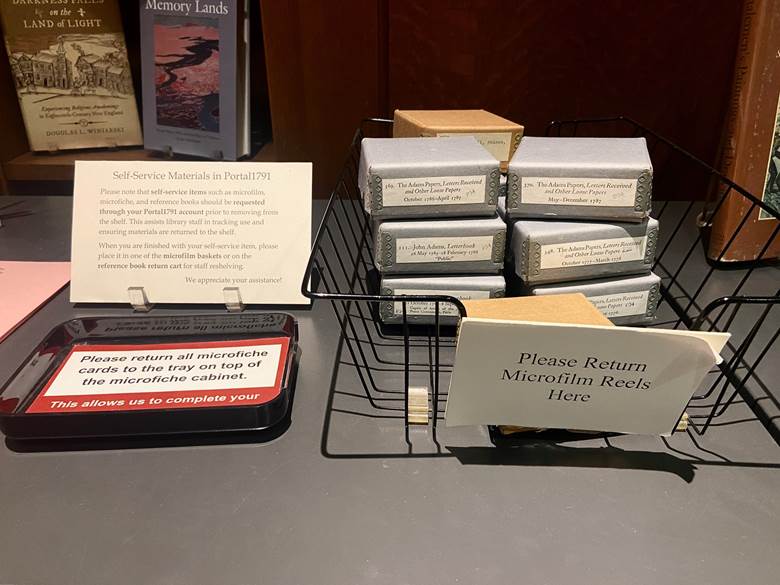
After that, we were split into three groups which would rotate to different stations around the facilities and meet various employees on the way. I was in Group A. We started at the library with Elaine Heavy, the Stephen T. Riley Librarian. She gave us some more information about the research process and introduced us to the rotating exhibit space in the hall outside, curated by Anne E. Bentley, which was currently displaying items related to flight. I enjoyed the pieces about blimps and hot air balloons! From there we moved into Reference Services for a discussion of old card catalogs, the reference process, and a deep-dive into what does and does not make it into their collections when they are purchasing or receiving donations of new material.
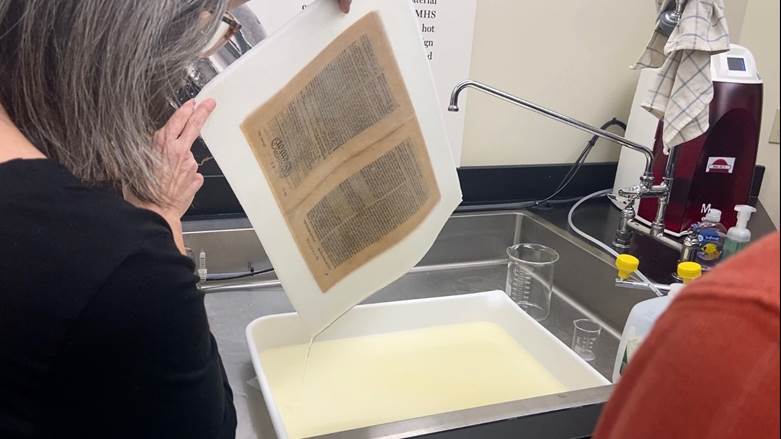
Then we went downstairs to meet Samantha Couture, the Nora Saltonstall Conservator & Preservation Librarian. The first thing I noticed was the presence of at least twenty objects resembling giant red oxygen tanks lined up along the hallway outside her lab. When asked about them, we found out that MHS uses a gas fire suppression system. Preservation and conservation are of particular interest to me, so I was loving our time with Sam. She laid out a selection of materials on the table for us to go over, demonstrating the difference between papers she had treated and ones that she hadn’t, with a notable difference in color.
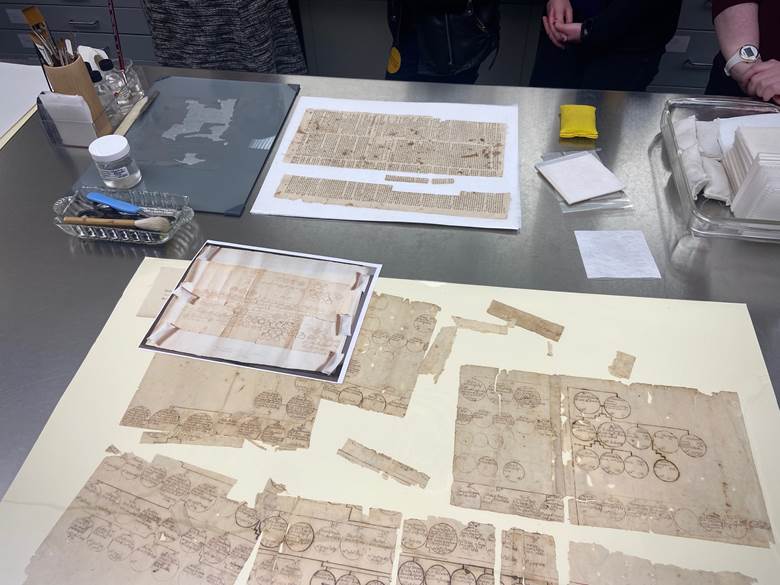
Most of her work involves paper repair. We got to hold some of the thin sheets of paper she used to fix rips, and in the final result the patch is nigh imperceptible. The repair paper she was showing us at the time was a type of thin Japanese paper called Tengucho, which she raved about. We talked at length about acidic wood pulp paper—which was popular after the 1950s—and rag paper, which is cotton/linen-based, non-acidic, and can last hundreds of years. I also got to learn about iron gall ink, which has been used for centuries and in practically everything, but is also the bane of every conservationist’s existence for its damaging properties. I want to be involved in this kind of work in the future, but Sam pointed out that most people with her job need an MA in Conservation now. Discouraging, as I’m in no position to obtain another degree now or soon. But I will be taking LIS 439 Preservation Management with Donia Conn this coming Fall or Spring 2027, so I’ll have some engagement to look forward to.
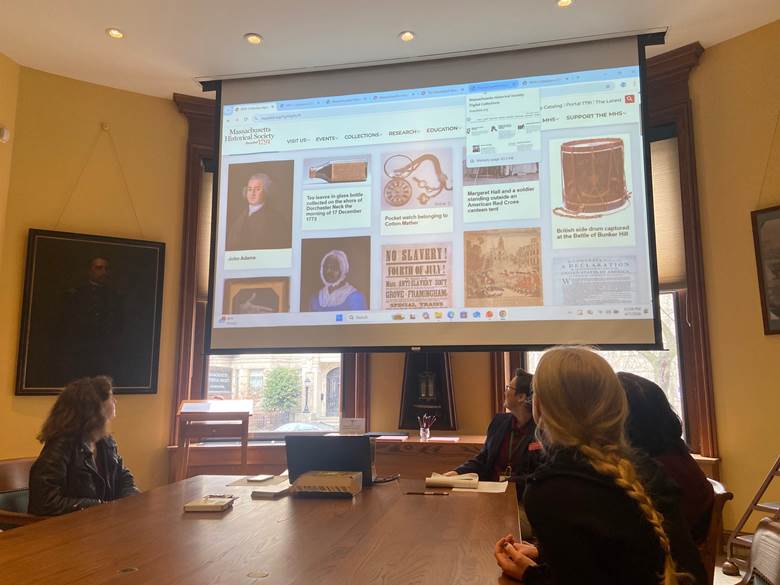
From there, we went back upstairs to meet Caitlin Walker, the Digital Archivist & Metadata Analyst and Nancy Heywood, the Lead Archivist for Digital and Web Initiatives. They gave us an overview of the MHS’s online presence and how to effectively use their digital resources for research. We talked about their metadata breakdown and how they follow a 3-2-1 back-up strategy: three copies of data, on two types of storage media, with one copy off-site. We also looked at a Phillis Wheatley letter as an example of digitization.
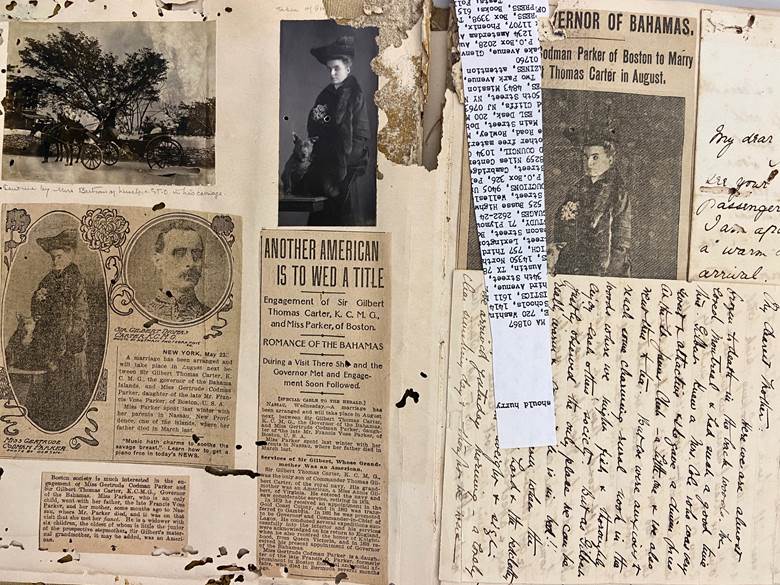
Lastly, we went up some more stairs for a quick visit to their Processing Room and learned about their appraisal process and materials used for storage. I only had a couple minutes to check things out in there before having to go, but I was interested in what I did get to see. Like this scrapbook! From there, it was just some closing remarks before our ‘class’ officially came to an end. We weren’t able to see their gallery because WGBH was filming there, so that will have to be a future visit.
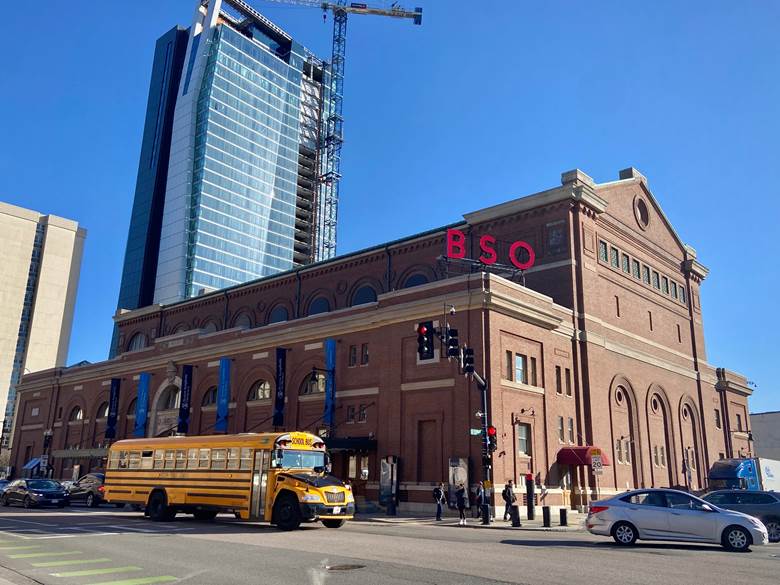
2. Boston Symphony Orchestra Archives
The next day, I took a group of 20 SLIS students on my most-anticipated Panopticon event of the semester—a visit to the BSO Archives! We met with Bridget Carr, the Blanche and George Jones Director of Archives and Digital Collections, and Sarah Funke Donovan, the Assistant Director Archives/Digital Collections Archivist. The BSO Archives is a more recent development, founded only in the 1990s. Bridget regaled us with a tale about how they didn’t have a computer when they first hired her, and she demanded one!
So what do they do? You can probably imagine, but I’ll include this blurb from their website:
“We actively collect, preserve, and provide access to thousands of concert programs, concert reviews, posters, photographs, manuscript collections, artwork, administrative files, and architectural plans that document the 140-year history and activities of the BSO and its many facets (BSO, Boston Pops, Boston Symphony Chamber Players, the Tanglewood Festival, and the Tanglewood Music Center), as well as Boston cultural and civic activities that occurred in Symphony Hall.”
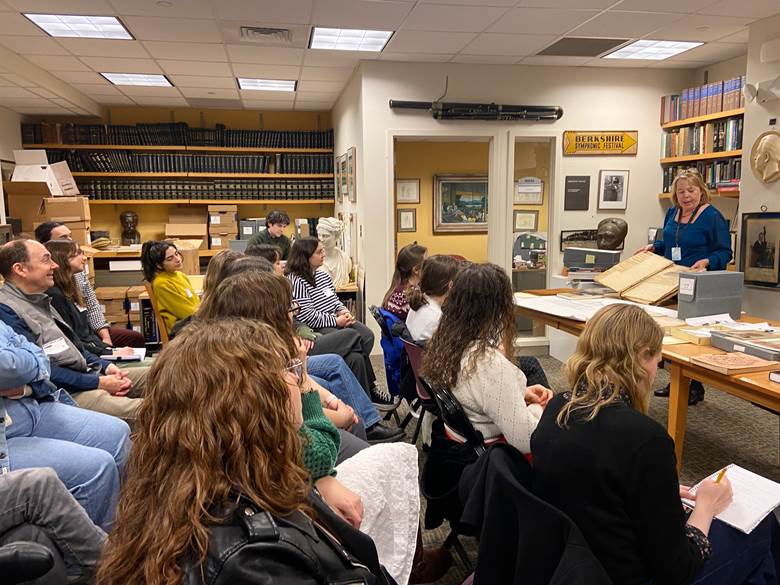
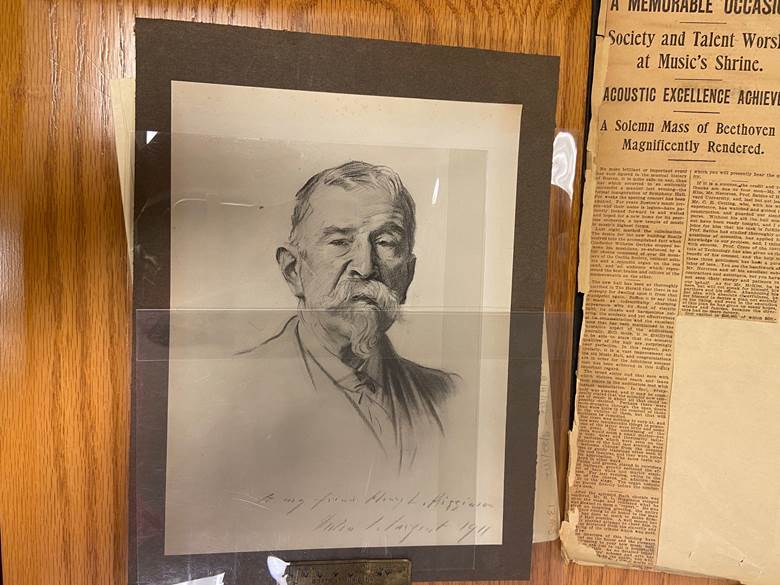
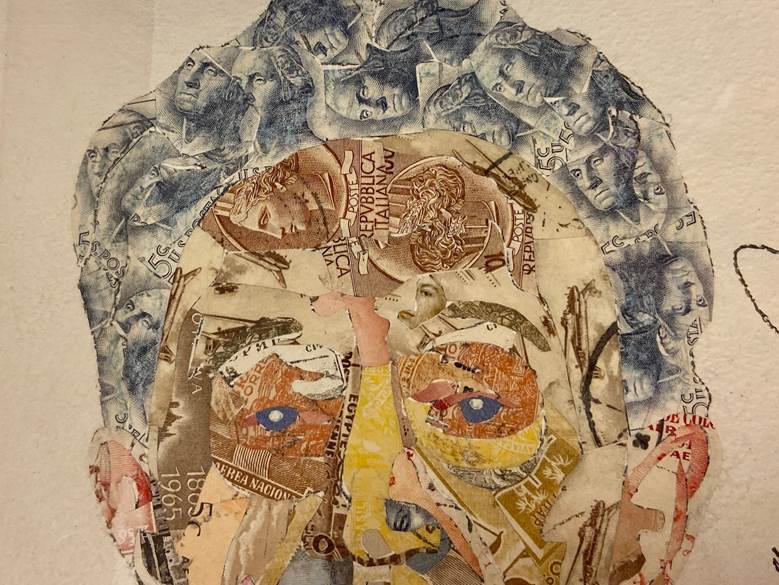
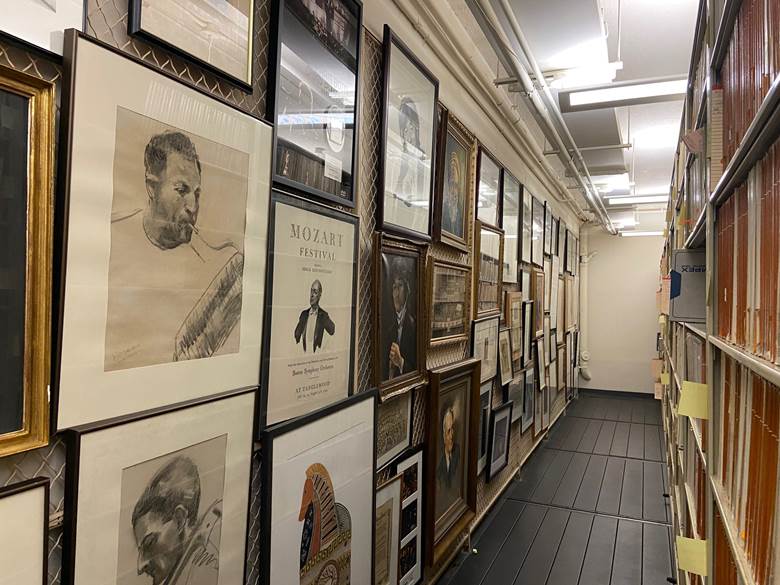
For most of our visit, we filled up the reading room for a presentation of selected materials and an overview of their digital resources/research process. Some of the noteworthy items included ceremonial conductors’ batons made of ivory (bequeathed to the BSO on the basis of ivory not being something anyone can sell anymore); traditional art like caricature sketches of orchestra members and a portrait done by John Singer Sargent (pictured here); philatelic art (stamp art); posters; programs; scores; audio tapes; textiles and more! One of the Online Exhibits we took a closer look at was “A Quilt of Connections: Pre-Revolutionary Artistic Circles in Russia,” which presents the Koussevitzky Quilt, part of a 19th century phenomenon of “friendship tablecloths” to preserve memories or special occasions. This one is covered in signatures representing the most notable figures in Russian arts, literature and music of the time, who were all a part of Koussevitzky’s circle in the early 20th century, before aristocratic life in Russia changed for good. Please go check it out! I love how it includes each signature and a portrait of the person who wrote it side-by-side.
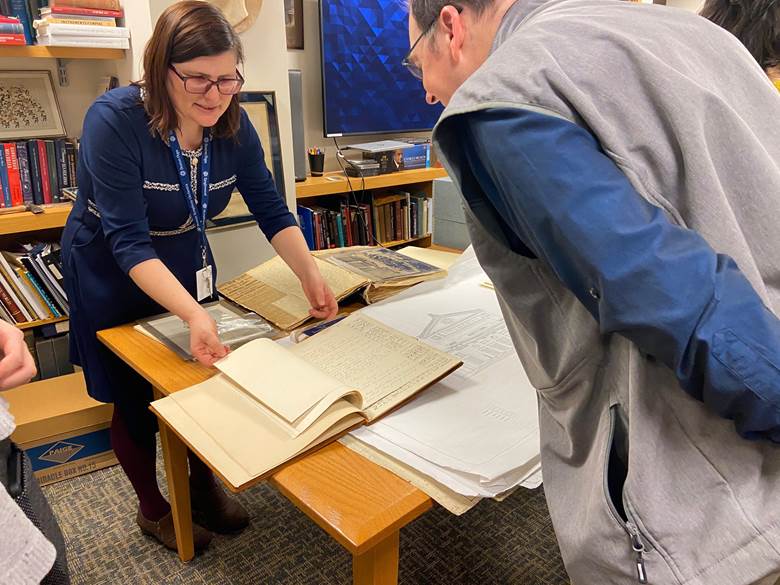
I had a blast, and I know everyone else did too because they told me so! Bridget especially had so many stories to tell. As part of our visit, we also got to peek into their stacks (which were surprisingly large!). They spoke at length about their collecting process and how, while they still collect, one of the things they have to refuse donations of is LPs. They already have three copies of each one in their collections! Their #1 priority is ensuring the preservation and access to their many, many audiovisual records. When asked about what else ranks on the priority list, Sarah said probably the scrapbooks. We ended our visit with a trip upstairs to see the latest exhibit, which included some very cool posters and a newspaper clipping about the opening of Symphony Hall in 1900! On the way there we passed by lots of practice rooms actively being used, and getting to hear their music as we moved along really added to the experience. I would love to go back one day for a more in-depth visit. And a show, of course!
And to wrap it up—on Friday, we held yet another Panopticon event at the Harvard Fine Arts Library in Cambridge. It was the nicest weather I’d seen so far, and I was able to wear a single shirt and skirt without feeling cold at all! When the students first arrived to the building, that gorgeous weather was a recurring topic.
For this venture, I gathered up 11 students for a tour of the Harvard Fine Arts Library with Jessica Evans, their Research and Collections Librarian. The HFAL is one of more than 20 libraries in the Harvard system. I first met Jessica last semester (Fall 2025), when she participated in the ARLIS/NA meeting held on Simmons University’s campus, with a career panel moderated by Panopticon’s previous Chair, Aurora Daniel. She gave me her card and told me to reach out if any of our students ever wanted to know more about the library—so I did, and here we are! I forgot to take a picture of the exterior, so just imagine a big, gray neoclassical building with a raised portico and six huge ionic columns (or look it up on Google, lol).
So what does the HFAL do? According to their website, “The Fine Arts Library supports research in the history of art, architecture, and visual culture, serving the Harvard community while welcoming researchers and scholars from around the world.” Jessica said as much when we met her, but added that the moniker of ‘fine arts’ is insufficient, saying that they are much more than that! The Fine Arts Library’s strengths include Western, Islamicate, East Asian, and Indian Art across a variety of formats, including monographs, exhibition catalogs, serials, reference, facsimiles and scrolls, artists’ books, magazines, photobooks, microfilm, antiquarian and rare books, auction catalogs, prints and print portfolios, photographs, and rubbings. Whew! And they are open to all researchers, on an appointment basis—not just Harvard folks!
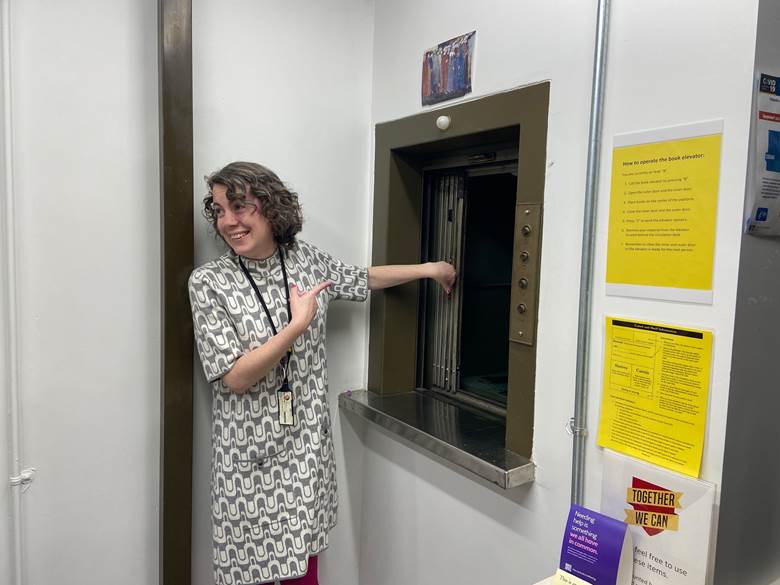
We had to go through security first thing before making our way down a very narrow set of stairs to the stacks. Jessica pointed out that there’s a book elevator connecting the floors, something especially necessary when you see the stairs and realize how difficult it could be to carry more than a few at a time on them.
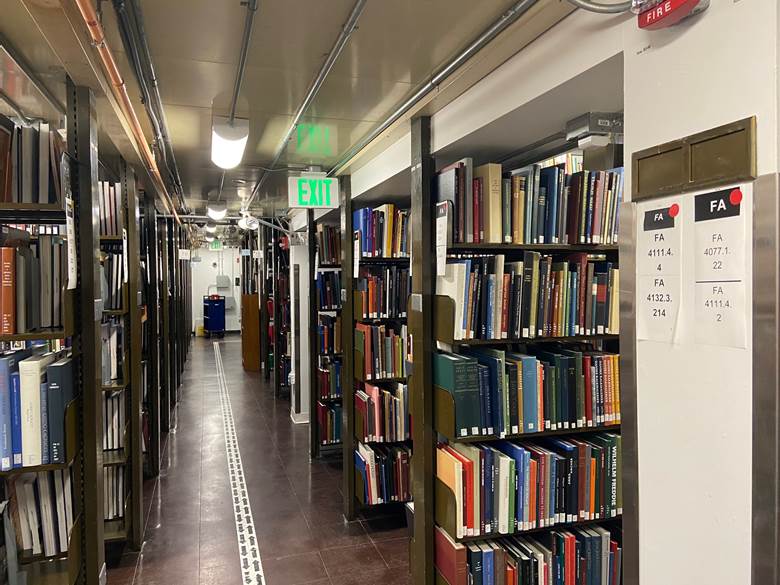
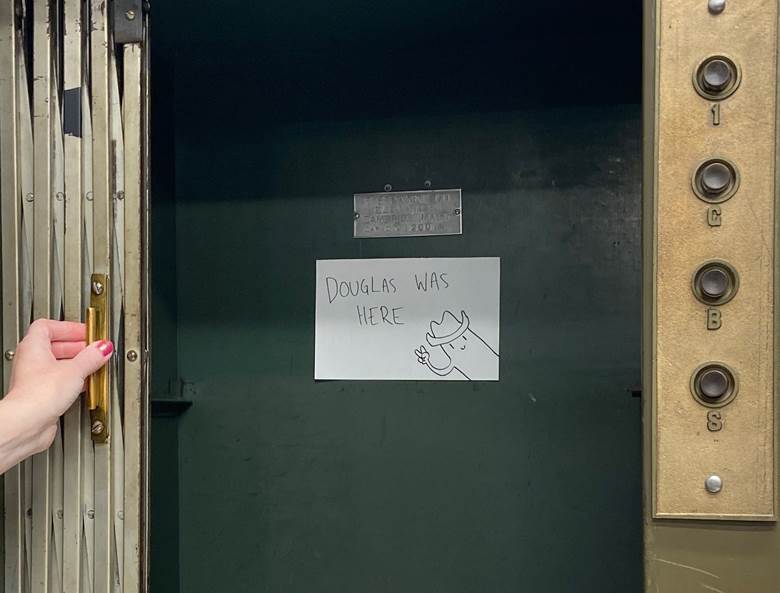
We learned about the way this library has to juggle three different cataloging systems as a result of expansions over the years (i.e. it started out as the library for the Fogg Art Museum, now part of Harvard Art Museums, which had its own classification system), and also about Douglas the Ghost! Apparently, he sneaks around the stacks and moves things without telling anyone, opening doors and such…But they say he’s friendly. We spent a good amount of time in the stacks doing some Q & A, talking about cataloguing, requests, and off-site storage. They have two locations, one of which is in New Jersey and is shared with Princeton and Yale.
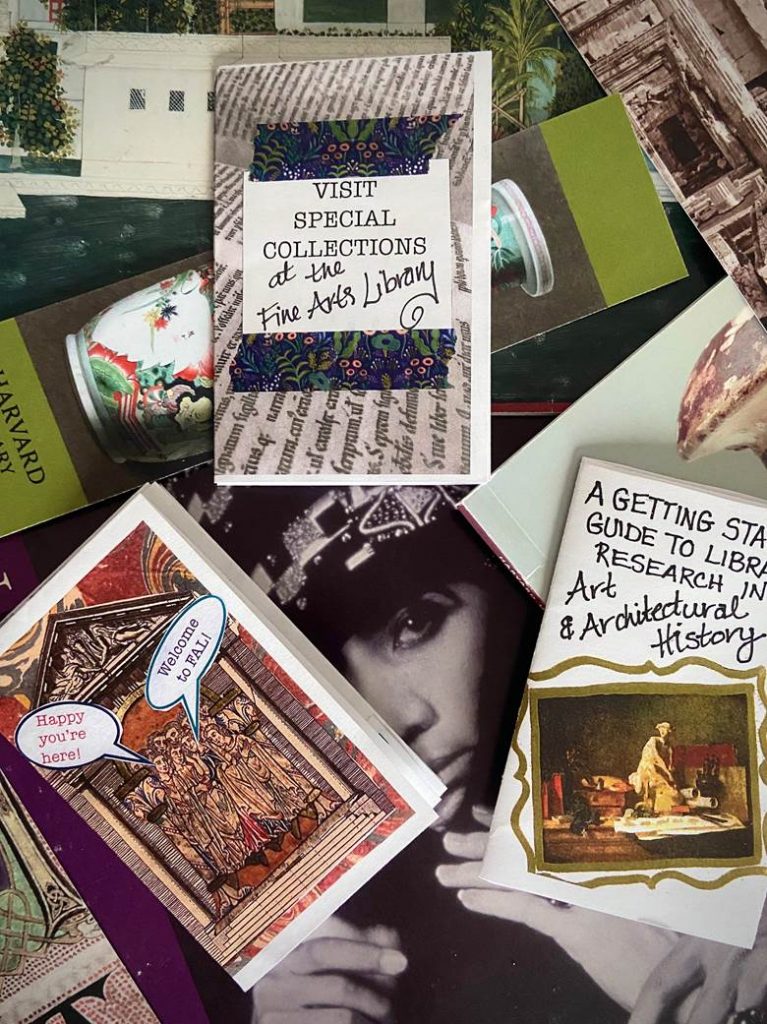
There is another floor beneath the stacks with their special collections, but we weren’t allowed to see that because of some construction happening next door. They had to move everything to prevent their items from being damaged as a result of the vibrations, and as such the space was “chaos.” So after the stacks, we wound through the reading rooms, with a couple of pauses at areas with rotating exhibits, zines, and puzzles. Speaking of zines, we all got to take home little zines with instructions about how to utilize the library! I’ll drop a photo of mine here.
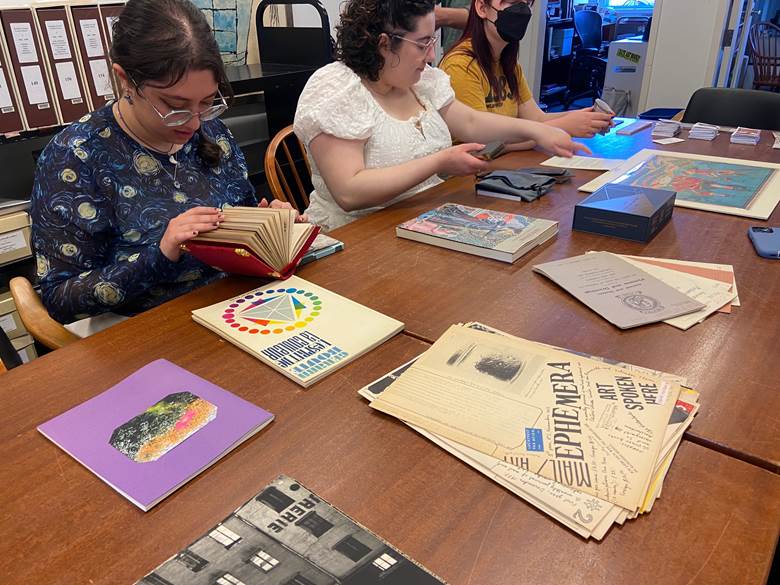
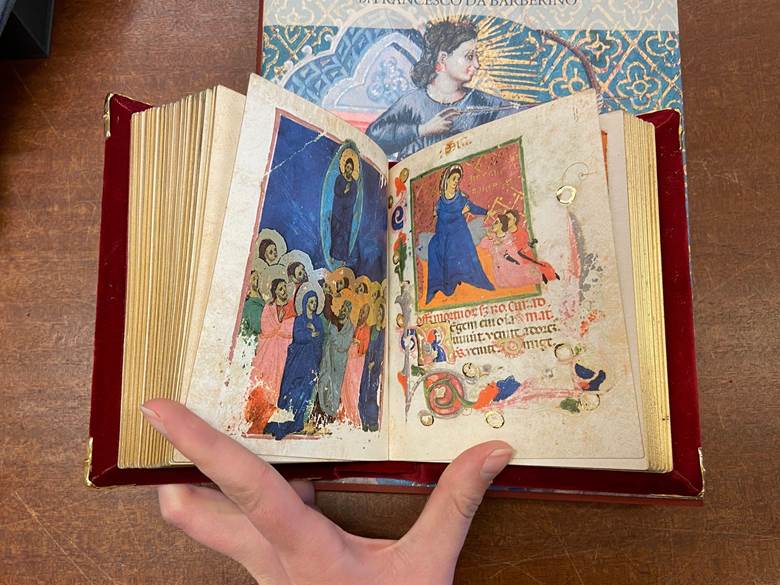
And finally, we made our way to the offices, where a table and chairs had been set out for us to peruse selected materials from the special collections. There was a really cool facsimile of an illuminated manuscript, some zines and magazines, a wonderful black and white photography book about Paris at night, artist books, and even some goodies just for us: bookmarks! I love bookmarks, so you best believe I took one of each. Jessica Aberle, the Collection Development Librarian, also came out to speak with us. We ended up having a conversation with them for the next thirty minutes that was informative and comfortable.
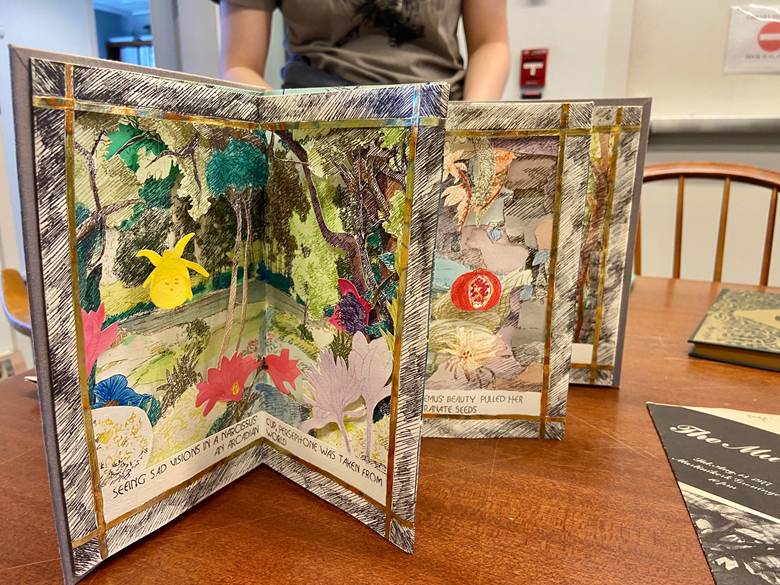
Speaking of goodies, we were all pleasantly surprised at the offer to go in their deaccessioned materials room and take our pic of materials there. Most of us left with some new art books. I grabbed five old editions of New Observations—a contemporary arts journal—an annual report of the Harvard Art Museums from 2002-2003, a Harvard Art Museums Bulletin from Summer 1996, a book called “The Metropolitan Museum of Art Papers: Etruscan Terracotta Warriors,” and finally, one behemoth catalog book titled “The Korean Collection at the National Museum of Asian Arts—Guimet, France.” Jessica wanted to know if we would use them for art or read them—I said both!
And that concludes the recap of my week! Now it’s time to grind for my finals. Wish me luck!